August 2026

August 2026

Feature Article

My Journey Home

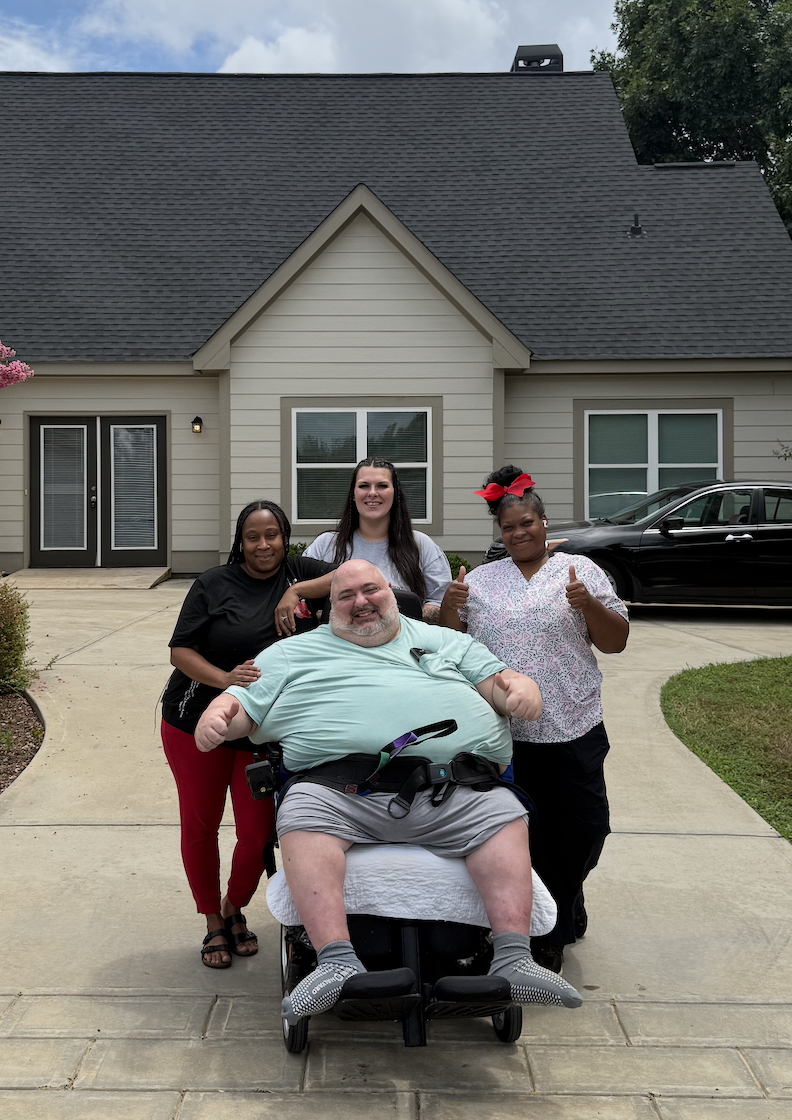
Nick Papadopulous with his DSPsFor ten years, I lived in a nursing home.

When people hear that, they often assume it was because I was old or because I needed medical care that could only be provided in an institution. That wasn't the case. I lived there because I didn't have access to the community supports I needed to live in my own home.

Like thousands of people with disabilities across Georgia, I wasn't waiting for a miracle. I was waiting for the right support.

Today, I'm writing this from my own home.

It's still hard to believe.

A Place That is Truly Mine

When visitors walk through my front door, I proudly give them a tour. I show them my kitchen, my living room, my bedroom, and the furniture I carefully picked out myself. I tell them about the parties I want to host, the cookouts I'm planning, and the family members I'm excited to invite over.

My brother, my nephews, and their families will finally be able to visit me in a place where I feel proud. For years, they only knew me in hospital gowns inside an institution. Now they'll know me as a homeowner.

For the first time in my life, I have a place that is truly mine.

One of the greatest gifts my home has given me is something many people never think about: privacy.

For ten years, I never had a room where I could simply close the door, think, relax, or enjoy silence. There was always noise. There was always someone nearby.

There was never a space where I could simply breathe.

Now I have that space.

I can sit in my living room with music playing through my couch speakers. I can light a candle or use aromatherapy, listen to music, watch movies, or simply enjoy the quiet. I'm looking forward to filling my home with plants, artwork, and colorful lighting that reflects my personality. I still have rooms to decorate, games to buy, and walls waiting to become my own.

This house isn't just where I live.

It's becoming home.

The Freedom to Choose

Freedom isn't just about where you live.

It's about having control over your own life.

For years, almost every decision required permission. If I wanted to leave the nursing home, I had to ask. If I wanted to go somewhere, I had to follow someone else's schedule. If there was an outbreak at the facility or transportation wasn't available, my plans were canceled.

Today, I decide if I want to spend the afternoon at the Botanical Garden, go shopping, cook dinner, or simply relax at home. I can meet my neighbors, attend church, explore Athens, and enjoy community events. I even dream about taking cooking classes, making homemade Greek recipes, and perfecting my own tzatziki sauce. I bought a food processor because I'm excited to learn.

These aren't bucket-list adventures.

They're everyday moments that I never had before.

I also look forward to celebrating milestones that once seemed impossible. Next year I'll turn 50, and instead of another birthday inside an institution, I'll celebrate with a house full of family, friends, laughter, and maybe the biggest cookout my neighborhood has ever seen.

That feeling is hard to describe.

It's called autonomy.

But none of this happened overnight.

The journey took ten years.

The house itself took years of planning, fundraising, advocacy, and coordination. More importantly, it took people who believed I deserved something better than institutional living.

The Power of Telling My Story

One of the biggest turning points came through Georgia's Storytelling Project.

When I agreed to share my story, I wasn't thinking about changing my own life. I simply wanted people to understand what life inside a nursing home was really like.

That storytelling eventually became the documentary 6,000 Waiting.

I never imagined how many people would watch that film.

After it was released, strangers began reaching out. People stopped me and said, "I saw your story. How can I help?" Others donated anonymously. Advocates invited me to speak. Podcasts, interviews, and writing opportunities followed.

The Storytelling Project planted the seed, and 6,000 Waiting helped it grow. Together, those stories showed what happens when people are forced to wait—not because they lack potential, but because they lack access to community supports.

Stories have power.

Stories change minds.

And changed minds change systems.

The Supports That Make Independence Possible

Another reason I'm living in my own home today is because of Georgia's NOW/COMP Waiver.

Many people have never heard of the NOW/COMP Waiver, but for thousands of Georgians with intellectual and developmental disabilities, it represents the difference between institutional care and community living.

The waiver funds the services that allow people like me to live safely in our own homes instead of nursing homes or institutions.

Without my NOW/COMP Waiver, my doctor made it clear that living independently in the community would not have been possible.

The waiver made my home possible.

But another group of people makes my life possible every single day.

My Direct Support Professionals (DSPs).

My DSPs are much more than caregivers.

They're teammates.

They're encouragers.

They're problem-solvers.

They're the people who help me with personal care, transportation, and daily routines. More importantly, they help me live the life I choose. Together we're figuring out what this new chapter looks like. They're helping me establish routines, explore my community, and slowly adjust after ten years of institutional living.

Sometimes I want to do everything at once.

I want to stay up late, explore every store, visit every park, and try every new experience. My DSPs gently remind me that I don't have to fit ten years of living into ten days. They're helping me build a life—not just escape an institution.

Because of them, I can go to church. I can shop for groceries. I can see movies, visit the botanical gardens, and hopefully spend afternoons at festivals and county fairs. I can build friendships, entertain guests, and maybe even find someone special to share my life with someday.

Those were dreams I never allowed myself to have while living in a nursing home.

Now they're possibilities.

People sometimes think independence means doing everything alone.

It doesn't.

Independence means having the freedom to direct your own life while receiving the supports you need to make that life possible.

My DSPs don't take away my independence.

They make it possible.

They deserve recognition, respect, and competitive wages because the work they do changes lives every day. Without a strong DSP workforce, community living simply isn't possible.

When policymakers invest in the NOW/COMP Waiver and the DSP workforce, they aren't just funding services.

They're investing in people.

Today, I can contribute to my local economy. I can shop at neighborhood businesses, eat in local restaurants, bank, volunteer, vote, and someday return to work. I want to pay taxes. I want to be known as a neighbor instead of a resident of an institution. I even employ people through my support team, something I never imagined would be part of my life.

I'm no longer separated from my community.

I'm part of it.

My Journey is Not Finished

Yet I know my story is not everyone's story.

Across Georgia, thousands of people remain on waiting lists for NOW/COMP Waivers. Many families continue providing around-the-clock care with little support. Others remain in nursing homes and institutions—not because they want to be there, but because community services aren't available.

No one should have to wait years for the chance to live in their own home.

If my journey has taught me anything, it's that hope is powerful, but hope alone isn't enough.

It takes advocacy.

It takes investment.

It takes policymakers willing to fund NOW/COMP Waivers and strengthen the DSP workforce.

It takes communities willing to believe that people with disabilities belong as neighbors, coworkers, volunteers, taxpayers, homeowners, and friends.

Today, I still think about the people I left behind in the nursing home.

Many of them are still waiting.

That's why my journey isn't finished.

Leaving the institution wasn't the end of my story—it was the beginning of a new mission.

My goal now is to help others find the same freedom I found. I want to continue telling my story, advocating for community living, and making sure the next person doesn't have to wait ten years for a place to call home.

Because after waiting so long, I've learned something simple but profound.

Home isn't just a house.

It's freedom.

It's possibility.

It's finally being able to dream about tomorrow instead of just getting through today.

Nick lives in Athens, GA and moved into his home in July 2026. Originally from New York, Nick is looking forward to decorating his place, grilling and having friends over, and cheering on the Dawgs.

Feature Story

Feature Article

What Makes My Week Work: An Accessible Home and Reliable Transportation

“What Makes My Week Work” is a new series in GCDD’s Making a Difference magazine. The goal is to share advocacy and success stories from self-advocates across Georgia. They talk about what helps their week go well and what needs to improve so people with disabilities can live and participate fully in their communities, as promised by the Americans with Disabilities Act (ADA) and the Olmstead Decision. Would you like to share your story? Complete this form.

This month, LJ Young and Sheila Jeffrey, a married couple living in College Park, Georgia, share what makes their week work.


For us, a good week starts with having a home that meets our needs. We recently moved, and it has been a great, positive change. We live in a safe, quiet, and accessible neighborhood. Our leasing office is very helpful, and we can walk to a lot of what we need daily. Also, our apartment is also fully accessible. That makes the biggest difference.

LJ: In our last apartment, I spent most of my time in my room because the space didn’t work for me. Now, opening, closing, and locking the front door is easy. I can get whatever I need from the refrigerator, and the shower and tub are fully accessible. I have a lot more freedom here.

Having our own spaces also helps our home work for both of us.

Sheila: LJ likes his video games, and I need a quiet, dim space because my traumatic brain injury causes seizures and chronic migraines. We each have somewhere comfortable to go. Everybody wins.

We’ve also been having fun grilling on our back porch. Our home gives us more freedom, but what happens outside our front door matters just as much.

We depend on MARTA to get to medical appointments, church, and a lot more. MARTA is the Atlanta area public transit system. When buses arrive on time and the bus’s wheelchair lifts and station elevators are working, everything goes smoothly.

But when one part of the system fails, everything else can quickly fall apart.

We once had to cancel an important medical appointment because MARTA couldn’t pick us up. The medical office said it could take six months or longer to reschedule.

LJ: Because of the side effects I was having, six months was way too long to wait. I ended up being admitted to the hospital for several days. Transportation should not be the reason someone misses medical care.

We’ve applied for MARTA Mobility, the MARTA paratransit service, but getting approved has taken a long time. We end up paying out of pocket for accessible transportation, which is very expensive. The Americans with Disabilities Act (ADA) is supposed to make sure people with disabilities have equal access to affordable public transit.

Sheila: I travel with a service dog, and some bus drivers aren’t educated on ADA protections. Drivers have refused to let her on the bus or told me to put her in a cage. She cannot do her job from a cage. That is not how service dogs work.

We have been left waiting in the rain, cold, and heat when buses were full or didn’t have a working wheelchair lift. It’s not just an inconvenience for us. It puts our safety at risk.

When public transportation works and meets our needs, we can do more than just make it to appointments that keep us healthy and out of the hospital. We can get out in the community and have fun. We can connect with other self-advocates and use our voices to make a meaningful difference.

The ADA and the Olmstead Decision helped protect the right of people with disabilities to live and take part in their communities. But those rights depend on services and systems that work in real life.

What makes our week work is not one service by itself. It is having the systems around us work together and help us live the lives we choose.

Feature Story, Self-Advocate Spotlight

Letter from Leadership

Letter from Leadership: Moving Forward Together

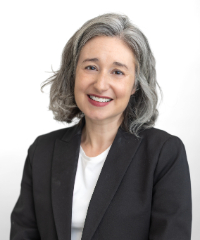
darcy robbWelcome to August in Georgia. That time of year when it feels like sticky soup outside and yet the kids are back in the classrooms. It’s always felt to me like a time of transition. Which is extra fitting this year, because we are living through a time of major transitions.

In less than three months, we Georgians will be heading to the polls to elect our next Governor, Lieutenant Governor, Secretary of State, U.S. Senator, and many more. For most of the top jobs, the person who holds the office now is not running again. So, no matter who wins, we will have many new state leaders.

You’ve heard me say it before and I’m going to say it again - this is a critical opportunity for disability advocates to engage. All the candidates are auditioning to be your next leaders. Get to know what they stand for. And remember, you can reach out to ask them questions and tell them what’s important to you. Mark your calendar for September 17, 2026. On that day you can hear from the candidates as they speak directly to the disability community at GCDD’s virtual candidate forum.

We’ve been getting a lot of questions this summer about the June 18, 2026 memorandum, or slip opinion, from the Office of Legal Counsel at the federal Department of Justice. The memorandum is titled, “Application of the Rehabilitation Act and Americans with Disabilities Act to State Institutionalization of Patients with Severe Mental Illness or Disabilities.”

The lawyer who wrote the memo says that two federal laws — the Rehabilitation Act and the Americans with Disabilities Act (ADA) — do not require states to follow an "integration mandate." This is a big change from the way these laws have been understood for many years.

This memo does not change the law. But it does signal change in the way federal agencies will interpret and enforce the law. Based on LOTS of conversations with partners, we believe this means more choices will be left up to each state about how and where to provide services to people with disabilities. To learn more, join us at 6:00 p.m. on Wednesday, August 26th, for a webinar with GCDD and our partners in Georgia’s Developmental Disabilities Network. Register for the webinar here.

This summer, we at GCDD put the finishing touches on our strategic plan for the next five years. At the broadest level, our goals are about three things: inclusion, advocacy, and information sharing. I am incredibly grateful to the hundreds of Georgians who provided input into the plan. My hope is that everyone reading this message will find a way to be a part of this work. Read more about our new strategic plan here: Moving Georgia Forward with GCDD’s 2027-2031 Strategic Five-Year Plan.

I hope you stay cool and find some joy as we wrap up the dog days of summer. Enjoy this issue of Making a Difference magazine.

D'Arcy Robb 
GCDD Executive Director

Letter from Leadership

GCDD Updates

Moving Georgia Forward with GCDD’s 2027-2031 Strategic Five-Year Plan

Imagine a Georgia where people with intellectual and developmental disabilities (I/DD) are not just present in their communities but truly belong.

Where people have friends, meaningful relationships, and opportunities to contribute. Where families feel connected and supported. Where young people leaving high school can see a future filled with possibilities. Where people with I/DD have a real voice in decisions that affect their lives—and where that voice is heard.

That is the future envisioned in the Georgia Council on Developmental Disabilities’ new five-year plan, which begins in October 2026.

Over the next five years and beyond, GCDD will focus on creating lasting change in the lives of Georgians with I/DD and their families. The measure of success will not be the number of meetings held or projects completed. It will be what is different in people’s lives.

All people want to belong and feel connected. Everyone needs to feel that they matter and have a place in their community. Yet people with I/DD can face barriers that make it harder to build relationships and feel connected. Together, we can tear those barriers down.

GCDD’s vision is a Georgia where more people with I/DD experience genuine belonging—where they have meaningful relationships, valued social roles, and opportunities to participate in everyday community life.

A good life means having choices about where you live, how you spend your time, who you spend it with, and what you want for your future.

Over the next five years, GCDD will work toward greater self-determination and leadership for people with I/DD. More people will have opportunities to advocate for themselves, participate in civic life, influence public policy, and help shape the communities they call home.

Economic opportunity is part of that picture, too. GCDD envisions more people with I/DD moving toward competitive, integrated employment, meaningful careers, and greater financial security. Young people should be able to leave high school with a pathway toward the future—not a cliff.

We want a Georgia that sees disability differently. Real change happens when attitudes change. GCDD wants more Georgians to understand disability, recognize the contributions of people with I/DD, and move beyond outdated stereotypes and assumptions. People are not heroes simply because they exist with a disability. The word “disability” no longer hides in the shadows – it’s part of the human condition. The word is no longer whispered. The disability community will not be sidelined.

We want a system that works for people. People and families should be able to find understandable, accessible information about the services, supports, and opportunities available to them.

These goals point toward something bigger than any single program or policy. They describe a Georgia where people with I/DD have stronger relationships, greater choice, meaningful opportunities, economic security, and a genuine voice in their communities.

That is the difference GCDD is working to make. And over the next five years, Georgians will have a chance to help make that vision a reality.

Find out more about GCDD’s 2027-2031 Five-Year Strategic Plan.

Calendar of Events

Events Calendar: Things to Look Forward To!

Find out what's happening in Georgia! Here are some events that may be of interest to individuals with developmental disabilities and their families.

Do you know of an upcoming event that others may be interested in? Send the information to .

Uniting for Change "Our Voice, Our Vote" Virtual Voting Workshops

Learn why voting matters, why your voice is important, and what you need to know to register and vote in 2026. Whether you're voting for the first time or just need a refresher, this workshop will help you feel informed, confident, and ready to make your voice heard.

The same workshop will be offered three different times. All three sessions cover the same information, so you only need to attend one workshop.

When:

  • Tuesday, August 18, 2026 at 10:00 AM
  • Thursday, September 24, 2026 at 10:00 AM
  • Tuesday, October 6, 2026 at 10:00 AM

Where: Zoom

Register:


Georgia DD Network Webinar

Mark your calendars to join Georgia’s DD Network for an informational webinar. This webinar will discuss the recent Department of Justice (DOJ) memorandum providing its interpretation of Olmstead v LC and EW (Lois Curtis and Elaine Wilson). The session will be led by staff from Georgia’s Developmental Disability Network. This network comprises the Center on Human Development and Disability at the University of Georgia (CHDD), the Center for Leadership in Disability at Georgia State University (CLD), the Georgia Advocacy Office (GAO), and the Georgia Council on Developmental Disabilities (GCDD).

Have a question about the DOJ memorandum? Submit it during registration, which is coming soon!

When: Wednesday, August 16, 2026 at 6:00 PM
Where: Zoom

Registration opening soon!


GCDD’s 2026 Candidate Forum

GCDD’s Candidate Forum invites individuals who are running for public office to speak on issues of importance to Georgia’s disability community. Georgians with intellectual and developmental disabilities, their families, and community members will have the opportunity to hear from candidates running for public office. The Candidates who have been invited to participate are competing for the offices of Governor, Lieutenant Governor, Secretary of State, Insurance Commissioner, Attorney General, Labor Commissioner, State Superintendent of Schools, and US Senator for Georgia.

When: Thursday, September 17 at 6:00 PM
Where: Zoom


Registration opening soon!


2026 Georgia Disability History Symposium: The Future is Mutual Aid

The symposium will feature Tim Vogt and Jan Goings from Starfire Council, Cincinnati. Other presenters will include multiple Georgians, both young and seasoned, who have made important impacts in our state. This event is free, but you must register. A catered lunch will be provided. CART and ASL are offered at this event.

This event is held both in person and online.

When: Thursday, October 8, 9:00 AM – 3:30 PM

Where:

  • Athens First United Methodist Church, 327 N. Lumpkin Street, Athens, GA
  • Online

Register: 2026 Georgia Disability History Symposium


GCDD 2026 Fall Council Meeting

The members of the Georgia Council on Developmental Disabilities (GCDD) meet quarterly to learn what is happening in Georgia and around the nation for people with developmental disabilities and their families. During these meetings, members spend time discussing best or promising practices, hearing from projects funded by GCDD, and conducting business to be an effective and efficient organization.

When: October 22-23 at 10:00 AM

Where: Savannah, GA (location TBD)

Learn more information about GCDD’s quarterly meetings.

Calendar of Events